A blunt message to Europe’s autonomy advocates
NATO Secretary-General Mark Rutte delivered a stark assessment of Europe’s security posture on Monday, January 26, 2026, telling European Union lawmakers that the continent is not in a position to defend itself without the United States. He framed the dependence as practical rather than theoretical, pointing to gaps in capabilities and the scale of investment that would be required for Europe to stand alone. Rutte’s core warning was direct: anyone who believes Europe can quickly substitute U.S. support should not underestimate the magnitude of what would have to change.
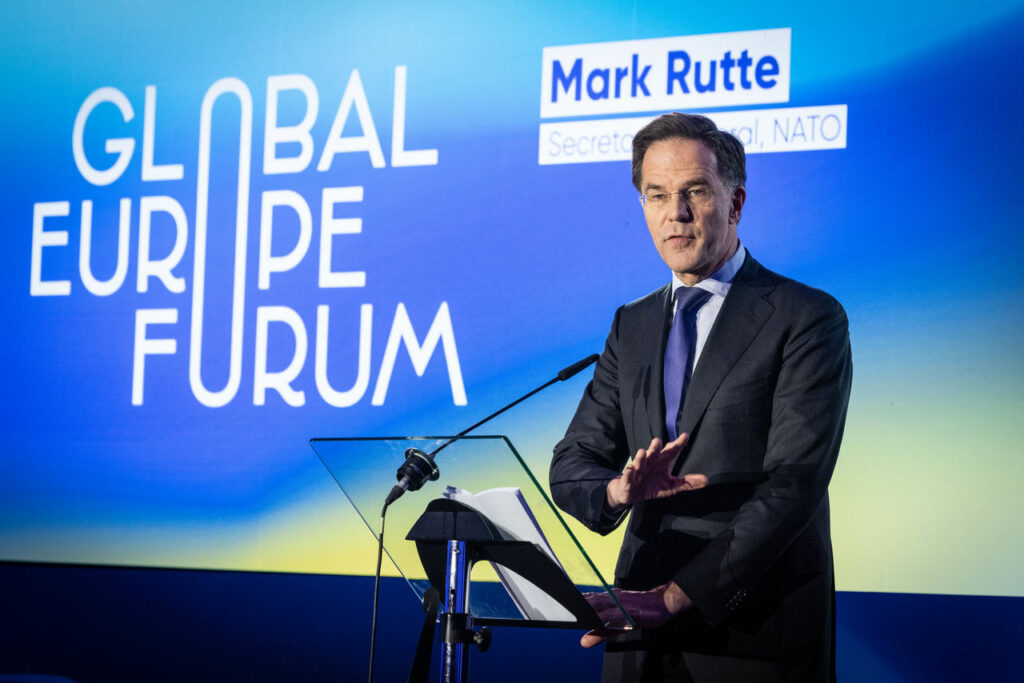
Rutte’s comments landed at a moment when European “strategic autonomy” has moved from a long-term aspiration to an urgent debate. Governments across the bloc have been weighing how to shore up defense industrial capacity, build stockpiles, and coordinate procurement more effectively. Yet the NATO chief suggested that, even with stronger cooperation, Europe would face a steep climb to replicate the full spectrum of U.S. contributions—especially high-end intelligence, logistics, and rapid force projection.
The spending gap and the nuclear question
Rutte argued that meeting or even exceeding current spending goals would not automatically translate into independence. In his view, Europe would need to do far more than incrementally raise budgets; it would have to reshape force structures and invest heavily in capabilities that are currently provided by the U.S. within NATO. He also highlighted a politically sensitive reality: without the United States, Europe would lose the American nuclear umbrella, which he described as the ultimate security guarantee that deters major adversaries.
That point goes beyond funding levels. Nuclear deterrence, command-and-control, and integrated planning are not built overnight, and Europe’s reliance on U.S. strategic assets has long been baked into NATO’s posture. Rutte implied that any serious bid for independence would require European leaders to confront difficult choices about nuclear arrangements, long-range strike, missile defense, and the industrial base needed to sustain them. He presented those challenges as the reason he was skeptical of promises that Europe can decouple quickly.
Tensions with Washington add urgency
Rutte spoke as NATO navigates fresh political strain following President Donald Trump’s threats to annex Greenland and impose tariffs on European allies—pressure that has unsettled capitals already anxious about U.S. reliability. While the alliance continues to emphasize unity, the episode has fueled arguments in parts of Europe that the region should be able to act more independently when Washington’s priorities diverge. Rutte acknowledged the debate but emphasized that, as of now, interdependence remains a fact of Europe’s defense.
His message can be read as both a warning and a prompt: Europe may choose to increase autonomy, but it should do so with a clear-eyed understanding of cost, timelines, and capability gaps. For NATO, the challenge is balancing a stronger European pillar with the continued centrality of U.S. power—especially at a time when global crises are stretching resources and political cohesion across the alliance.